Practical
Renting a car on Curaçao: what to know before you book
Do you need a car on Curaçao, which type to choose, what driving is like and how to avoid the usual pitfalls — practical advice for guests of Villa Martini.
3 min read
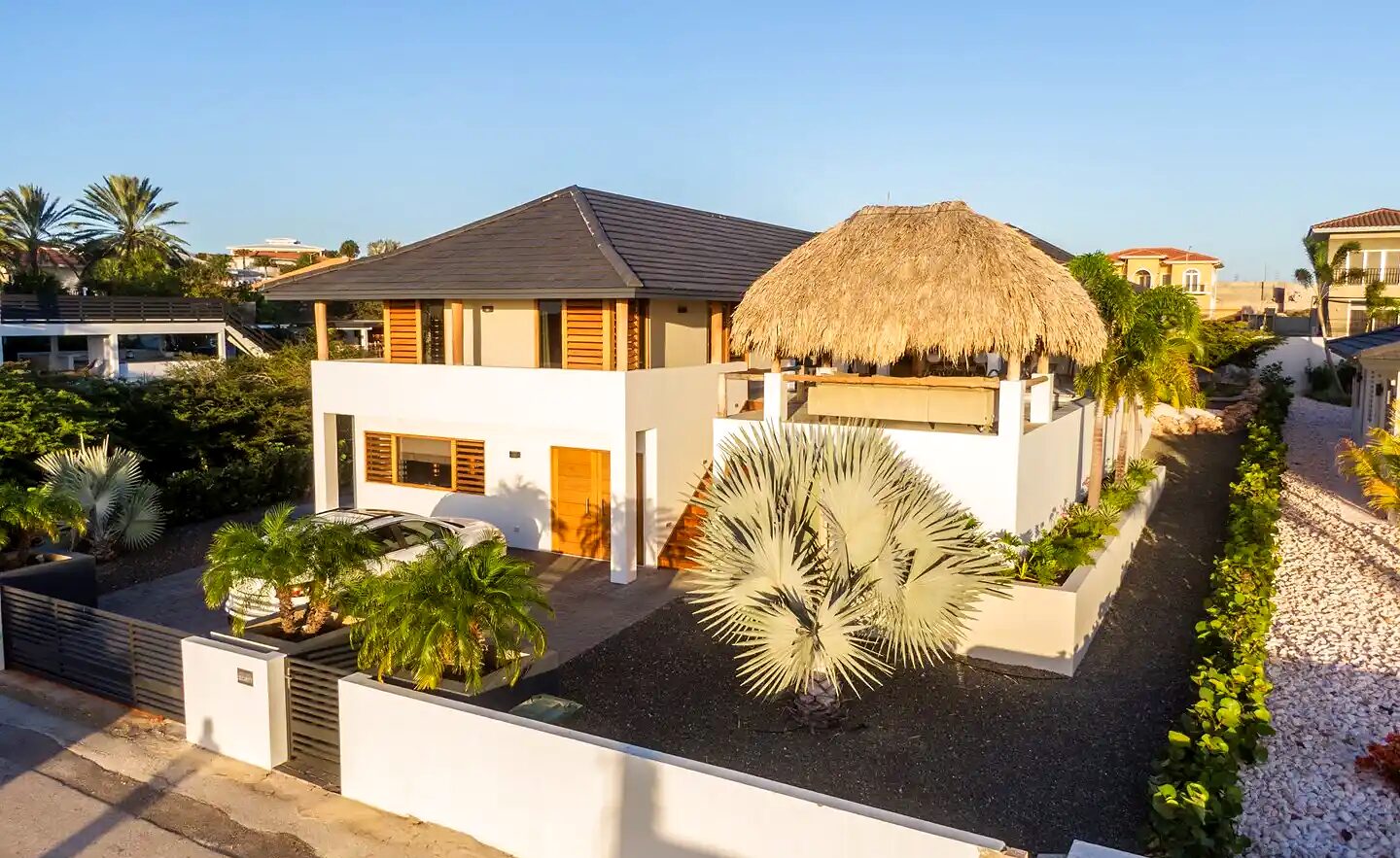
Yes, you need a car. Curaçao has no real public transport for visitors, taxis are expensive for daily use and the best beaches are spread along sixty kilometres of coast. From Villa Martini you can walk to Jan Thiel beach, but for everything else — supermarkets, Willemstad, the west coast — a hire car is the way the island works.
Booking
- Book ahead, especially for December–April and the summer holidays, when the island runs out of cars.
- Pick up at the airport. Both international brands and reliable local companies have desks or shuttle services at Hato airport; the drive to Jan Thiel is about 25 minutes. We are happy to recommend companies our guests have used.
- Automatic gearboxes are the norm and cost little extra; air-conditioning is essential.
- Which car? A compact car reaches every beach in this guide, including the west coast. A small SUV gives more clearance on the unpaved last stretch to some coves and more space for beach gear. A 4×4 is not needed.
- Insurance: check the excess (deductible) and whether tyres, glass and the underside are covered — these are the usual exclusions and the usual damage. A credit card deposit is standard.
- Licence: a valid Dutch, EU, UK or US driving licence is accepted; an international permit is not required.
Driving on the island
Traffic drives on the right, distances are short and the main roads are paved and well signposted. A few things are different from Europe:
- Speed limits are low — 45 km/h in built-up areas and 60–80 km/h outside — and enforced with speed bumps ("drempels") more than with cameras. Slow down for them: some are large.
- Roundabouts are common; traffic on the roundabout has priority, but do not assume everyone knows that.
- Give way to the right at unmarked junctions, and watch for goats, iguanas and dogs on quieter roads, especially at dusk.
- Rain makes roads slippery in the first minutes, and dips ("bakken") can flood briefly after a downpour.
- Filling up: attendants may fill the tank for you; pay at the kiosk or pump. Cards are accepted almost everywhere.
- Parking in Willemstad is paid in the centre; there are car parks near the Waaigat in Punda and around the Rif Fort in Otrobanda.
Safety and common sense
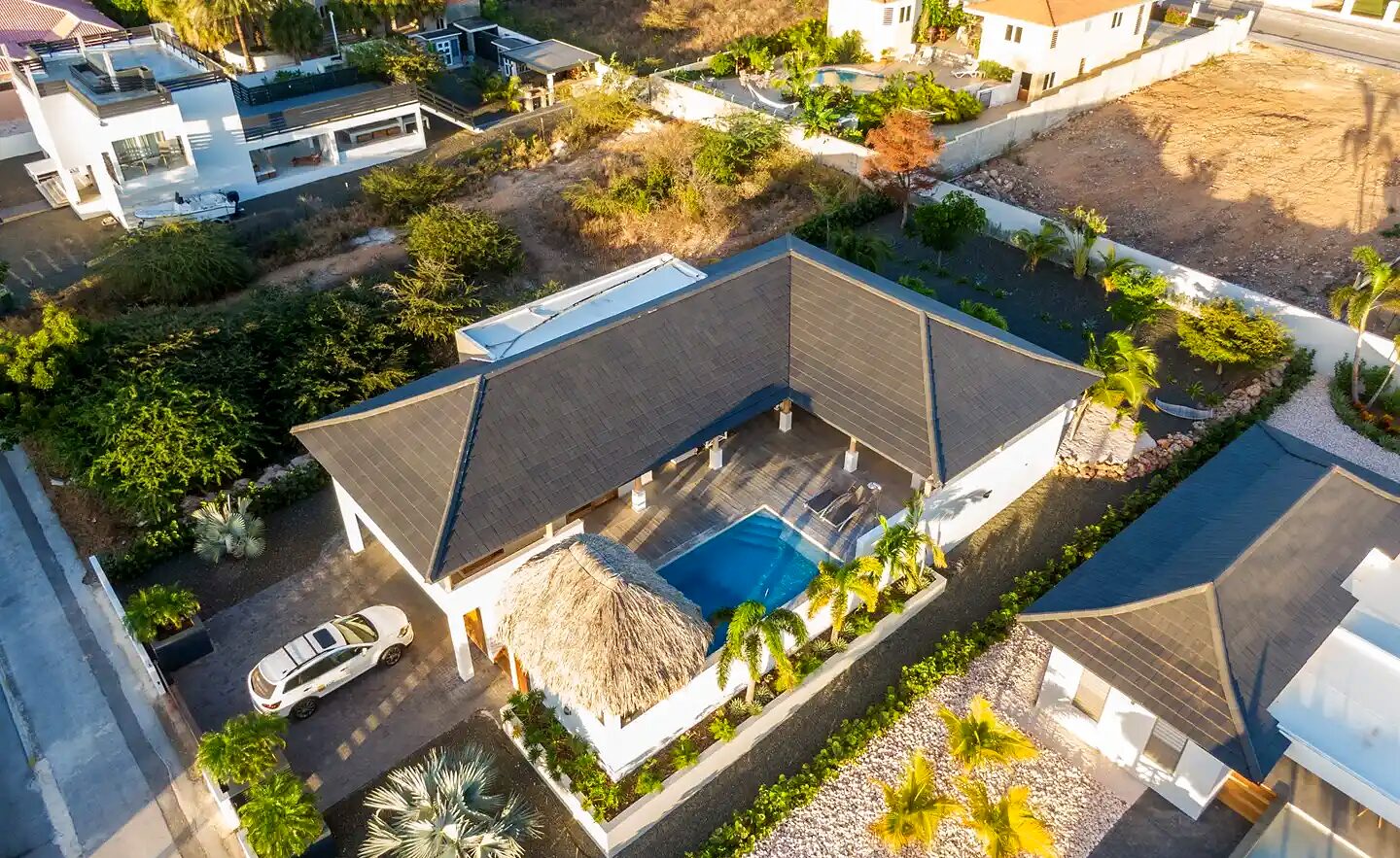
Curaçao is a relaxed and generally safe island, but car break-ins at beaches happen. Take nothing valuable to the beach that you cannot carry with you, leave the glove box visibly empty, and park where the car can be seen. At the villa your car is behind the gate on the private driveway.
Alternatives
For an evening out in Pietermaai or Willemstad, a taxi is a sensible alternative to driving back after wine; agree the fare in advance, as taxis do not use meters. Scooters and e-bikes can be rented at Jan Thiel for short local trips. And for the first afternoon, or a day when nobody wants to drive, remember that the beach is a ten-minute walk away.